- How does travelling cause swollen legs and feet?
- How do compression garments help?
- Put your compression garments on before your journey.
- Make sure your compression garments fit properly.
- Keep moving during your trip.
- Give yourself enough legroom.
- Stay hydrated.
- Make comfortable travel part of your mobility plan.
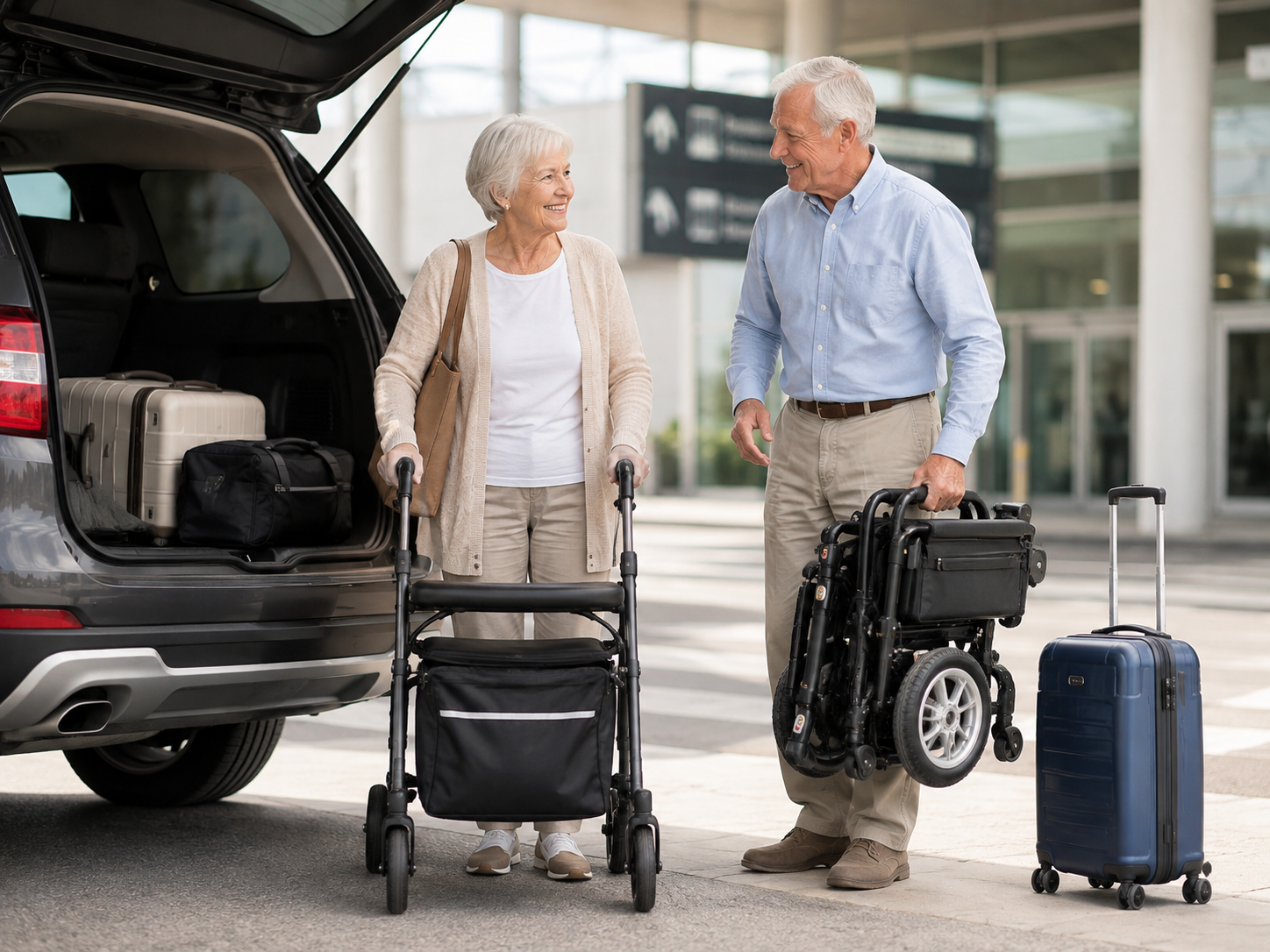
Travel should be something to look forward to with excitement. However, long hours in a plane, car, bus or train can be uncomfortable when you experience leg swelling or circulation concerns. Sitting in one position for an extended period can leave your feet and legs feeling heavy, tired or swollen.
Compression garments can help make the journey more comfortable for many travellers. With a little preparation, the right fit and regular movement, you can enjoy your trip while supporting healthy circulation.
How does travelling cause swollen legs and feet?
Long periods of sitting can make it more difficult for blood in your legs to circulate back toward your heart. This is one reason your ankles, feet and lower legs may feel swollen after several hours of travel.
In her Healthline article about wearing compression socks while flying, health writer, Kathryn Watson explains that when travellers spend extended periods in a confined space without much movement, the veins in the legs may have difficulty circulating blood back to the heart. The result can be increased pressure and swelling in the lower legs.
Air travel can be particularly challenging because passengers have limited opportunities to move around. However, similar problems can occur during long car journeys. Watson notes that extended car travel can also restrict the legs and contribute to blood pooling and swelling.
How do compression garments help?
Compression stockings apply pressure to the legs to encourage circulation. Watson describes them as garments that “squeeze and stimulate circulation in the calves and feet.” There are several types of compression socks, she points out.
Graduated compression garments provide their strongest pressure around the ankle and become less tight farther up the leg. Nonmedical support hosiery generally provides less compression and is commonly used to help with tired legs and circulation. Anti-embolism stockings are intended for people with limited mobility and may be prescribed to help prevent deep vein thrombosis (DVT).
The appropriate type and compression level depend on your needs. If you have an existing medical condition or concerns about circulation, speak with your doctor or another qualified healthcare professional before travelling.
Put your compression garments on before your journey.
Practice putting on your compression socks at home before your trip. Their snug fit can make them more challenging to put on than regular socks. Learning the process beforehand can save frustration on travel day.
For air travel, Watson suggests that a good time to put compression socks on may be at the gate before boarding. They can also be put on at home before leaving for the airport. Take your time and smooth out the fabric so that it does not bunch, fold or roll. If you have difficulty bending or reaching your feet, a compression stocking aid may make dressing easier.
Make sure your compression garments fit properly.
Compression garments are supposed to feel snug. However, discomfort should not simply be accepted as part of wearing them. An incorrect fit can contribute to problems. Watson notes that possible side effects include itching, burning, chafing, bruising and impaired circulation, although these problems are less likely when compression socks fit correctly.
Before a long trip, wear your garments for shorter periods at home so you know how they feel. Check your skin when you remove them and pay attention to persistent redness, irritation or other changes. Higher-pressure graduated compression stockings typically require professional fitting and a prescription. If you are uncertain about the right compression level, ask a healthcare professional for advice rather than simply choosing a stronger garment.
Keep moving during your trip.
Compression garments are useful, but they should not replace movement. If you are able to do so safely, get up and walk periodically during a long flight or train journey. Watson recommends walking along the airplane about every hour during longer flights when possible.
You can also encourage movement while seated. Ankle pumps are particularly convenient because they require very little room. Simply move your feet up and down at the ankles several times. These small movements engage the calf muscles, which play an important role in moving blood from the lower body toward the heart.
For road trips, schedule regular stops where you can safely get out, walk around and stretch. If you use a mobility aid, plan accessible rest stops ahead of time so that breaks are convenient rather than stressful.
Give yourself enough legroom.
Watson recommends that if you’re flying, you store your belongings in the overhead compartment to maximize the space around your legs. An aisle seat can also make it easier to stand and move without having to navigate around other passengers.
Try to avoid placing bags where they restrict your feet. Wear comfortable clothing that allows you to move easily and footwear that accommodates any normal changes in foot size during a long journey.
Stay hydrated.
Remember to drink water regularly while travelling. Watson recommends drinking plenty of water before and during a flight and limiting salty, high-sodium foods. It is easy to forget about hydration during a busy travel day, so keep water accessible when possible. Pair these habits with regular movement, adequate legroom and properly fitted compression garments for a more comfortable travel routine.
Make comfortable travel part of your mobility plan.
Travelling comfortably with compression garments comes down to preparation. Choose properly fitted garments, practice putting them on before departure, keep your legs moving, stay hydrated and plan regular opportunities to stretch.
Mobility and independence do not have to stop when you leave home. Advantage Home Health Solutions is experienced in helping Calgary and area clients find practical mobility solutions for safer, more independent living. We work closely with Occupational Therapists, home care providers and other healthcare professionals, providing expert advice and options based on each client’s needs.
From mobility scooters, wheelchairs, walkers and rollators to stairlifts, porch lifts, power lift chairs and adjustable beds, our team can help you find equipment that supports greater comfort and confidence at home and on the go. As well, for any questions about our compression stockings, please don’t hesitate to give us a call at 403-460-5438. You may also email us by filling out the form on our Contact page.